Imagine if you could see every single move your email recipients make. In 2026, this is not just possible, it is essential. Welcome to the new era of email events.
Tracking email events gives you the insights needed to adapt, personalize, and optimize every campaign. As digital communication evolves, understanding these events is the key to standing out.
This guide will help you master email events, from basic definitions to advanced analytics, so you can drive engagement and growth. Ready to unlock your full email potential? Dive in and transform how you connect in 2026.
Understanding Email Events: Definitions and Core Concepts

Understanding email events is the foundation for mastering modern digital communication. These events are not just technical signals, but the building blocks that reveal how recipients interact with every message you send. By tracking and analyzing email events, organizations gain the visibility needed to optimize engagement and ensure successful delivery.
What Are Email Events?
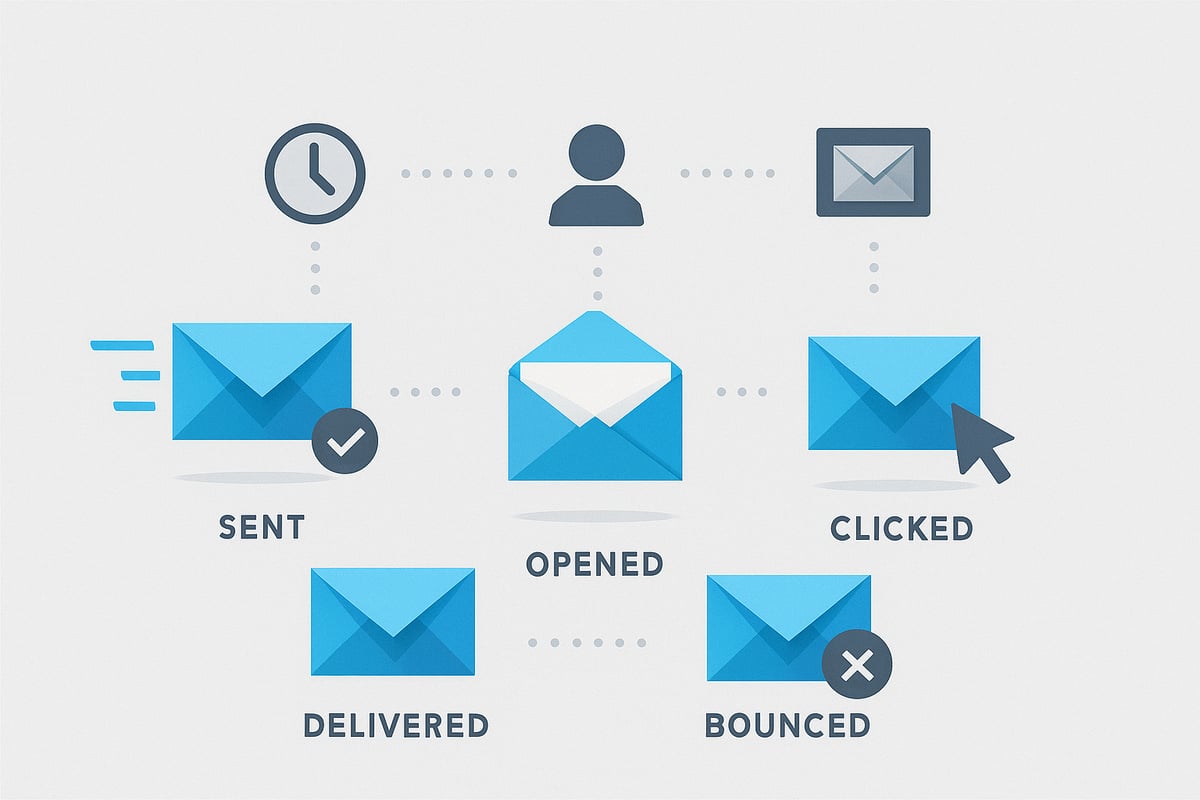
Email events are any actions or status changes that occur during the lifecycle of an email. These can include when an email is sent, delivered, opened, clicked, bounced, or marked as spam. Each of these events marks a key moment in the journey from sender to recipient.
The lifecycle of an email typically starts with creation, moves through sending and delivery, and ends with recipient interaction or feedback. Every step generates specific email events, each containing valuable metadata like timestamps, recipient addresses, campaign IDs, and event types. This structured data provides granular insight into how users engage with your messages and how well your emails are performing.
For example, leading platforms like HubSpot track events such as SENT, OPEN, CLICK, BOUNCE, and SPAMREPORT. This robust event tracking is essential for understanding the effectiveness of your campaigns. If you want to dig deeper into how these events are tracked and analyzed, you can explore How email stats work.
Understanding the core concepts behind email events is crucial for anyone aiming to leverage advanced analytics, automate workflows, and maintain compliance. These events form the backbone of sophisticated marketing automation and are critical for both technical and business teams.
Categories of Email Events
Email events can be grouped into several main categories, each serving a specific purpose in the email communication process.
- Submission Events: Include SENT and DROPPED. These occur when an email is first created and checked for eligibility to send.
- Delivery Events: Cover PROCESSED, DELIVERED, DEFERRED, and BOUNCE. These reflect what happens as the system tries to deliver the message.
- User Engagement Events: Include OPEN, CLICK, PRINT, and FORWARD. These track how recipients interact with the email after delivery.
- User Status Events: Capture STATUSCHANGE, SPAMREPORT, and SUPPRESSION, reflecting changes in recipient preferences or complaints.
Many analytics APIs, such as HubSpot’s, distinguish between up to 12 different types of email events, allowing for precise tracking and reporting. This level of categorization enables teams to automate responses, generate detailed reports, and maintain a healthy email list.
Here’s a quick table summarizing the main categories and examples:
| Category | Example Events | Purpose |
|---|---|---|
| Submission Events | SENT, DROPPED | Tracks creation and initial eligibility |
| Delivery Events | DELIVERED, BOUNCE | Monitors delivery outcomes |
| User Engagement Events | OPEN, CLICK | Measures recipient interaction |
| User Status Events | SPAMREPORT, SUPPRESSION | Reflects complaints and preference changes |
By categorizing email events, organizations can automate processes and gain actionable insights. This structured approach is essential for scaling digital communication and optimizing every stage of the email journey.
Key Types of Email Events and Their Business Impact
Unlocking the true power of email events begins with understanding the different types and how each affects your business. Each event provides a unique data point, offering insight into user behavior, deliverability, and compliance. By tracking these events, organizations can uncover opportunities for engagement, optimize campaigns, and protect sender reputation.
Submission and Delivery Events
Submission and delivery events are the foundation of tracking email events. These cover the journey from the moment an email is sent to its acceptance or rejection by the recipient's server.
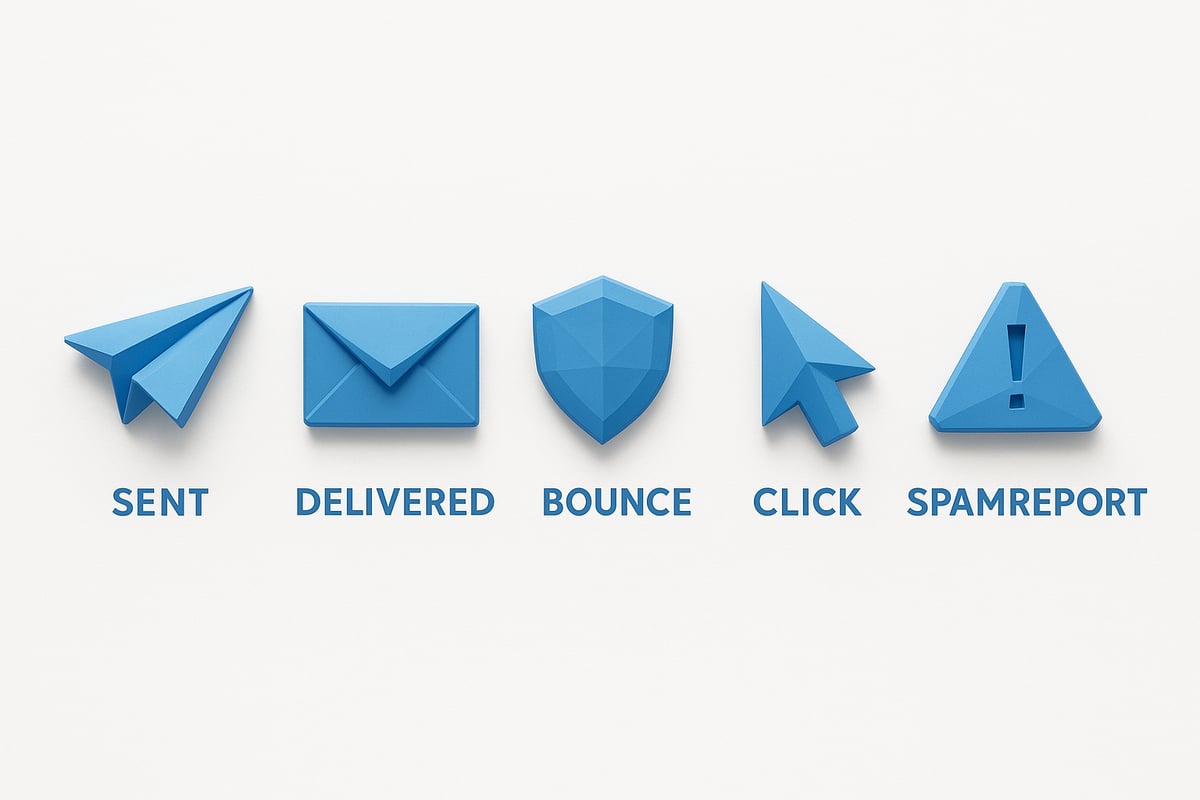
Key submission and delivery events include:
- SENT: The email is accepted for processing and queued for delivery.
- DROPPED: The email is rejected before delivery, due to issues like invalid addresses or unsubscribes.
- PROCESSED: The message is ready for handoff to the sending infrastructure.
- DELIVERED: Confirmation that the recipient’s server has accepted the email.
- DEFERRED: Temporary failure, prompting the system to retry delivery.
- BOUNCE: Permanent failure, typically categorized as hard or soft bounces.
A high bounce rate can damage sender reputation and impact future deliverability. For example, platforms like HubSpot classify bounces into categories such as UNKNOWN_USER, MAILBOX_FULL, or SPAM. Monitoring these events enables businesses to address issues proactively, ensuring healthy email lists and optimal deliverability. For deeper insights into resolving delivery issues and understanding bounces, see Troubleshooting email delivery.
| Event Type | Description | Business Impact |
|---|---|---|
| SENT | Queued for delivery | Tracks sending volume and timing |
| DELIVERED | Accepted by recipient’s server | Confirms successful delivery |
| BOUNCE | Permanent failure | Affects sender reputation |
| DROPPED | Rejected before delivery | Highlights list hygiene issues |
| DEFERRED | Temporary failure | Impacts timing and retry strategies |
Understanding these email events helps organizations maintain high delivery rates and avoid common pitfalls.
User Engagement Events
User engagement events track how recipients interact with emails after delivery. These events provide the most direct signals of recipient interest and campaign effectiveness.
Key user engagement events include:
- OPEN: The recipient opens the email, an important metric for gauging interest.
- CLICK: A link within the email is clicked, which is the strongest signal of engagement.
- PRINT: The email is printed, often relevant in B2B or internal communications.
- FORWARD: The email is forwarded, indicating valuable content.
Each click event typically logs metadata such as the clicked URL, referer, user agent, and recipient location. While open rates are affected by privacy changes, click events remain reliable for measuring engagement. Tracking these email events enables marketers to personalize content, test subject lines, and optimize send times. This data drives segmentation and targeted campaigns that increase ROI.
User Status and Feedback Events
User status and feedback events reflect changes in recipient preferences and provide essential signals for compliance and list management.
Key user status and feedback events include:
- STATUSCHANGE: Subscription preferences are updated, such as opt-in or opt-out actions.
- SPAMREPORT: The recipient marks the email as spam, which is critical for compliance and sender reputation.
- SUPPRESSION: The email is withheld from delivery due to unengaged recipient status or regulatory requirements.
For example, HubSpot uses suppression events to prevent emails from being sent to users with low engagement histories. Managing these email events helps maintain list hygiene, reduce spam complaints, and ensure regulatory compliance. By monitoring status changes and feedback, businesses can automate suppression logic and protect their brand from blacklisting.
In summary, understanding the key types of email events is essential for driving better engagement, maintaining deliverability, and staying compliant. Each event type offers actionable insights that directly impact business performance.
The Evolution of Email Event Tracking: Trends and Innovations for 2026
As we approach 2026, the world of email events is experiencing rapid transformation. Organizations are adopting advanced methods to capture, process, and act on every recipient interaction. This evolution is not just about new technology but also about meeting rising expectations for data-driven engagement, security, and compliance.
Enhanced Data Granularity and Real-Time Analytics
Modern email events tracking has shifted from batch-based summaries to real-time data streams. Marketers and IT teams now access millisecond-level timestamps, unique event IDs, and detailed metadata for each event.
- Real-time dashboards offer immediate insight into campaign performance.
- APIs return granular details, including device, browser, and location data.
- Event logs are searchable, making root-cause analysis and attribution easier.
This precision in email events enables organizations to react faster and make better-informed decisions, directly impacting engagement and deliverability metrics.
Privacy, Compliance, and Deliverability
In 2026, privacy regulations like GDPR and CCPA continue to shape how email events are tracked and stored. Platforms automatically manage user status changes, unsubscribes, and suppressions to ensure compliance.
- Authentication protocols such as DMARC, SPF, and DKIM are now standard.
- Events include detailed policy failure data, helping teams resolve issues quickly.
- Automated suppression lists reduce legal risk and protect sender reputation.
For a deeper dive into upcoming privacy and security strategies, see Email Marketing Trends for 2026. These developments ensure that email events tracking supports both compliance and user trust.
AI and Predictive Analytics
Artificial intelligence is now integral to email events analysis. Machine learning models process historical event data to predict optimal send times and segment audiences for hyper-personalized campaigns.
- AI identifies engagement patterns, boosting open and click rates.
- Predictive analytics suggest content adjustments in real time.
- Dynamic segmentation adapts to user behavior as it happens.
By leveraging AI, businesses transform email events into actionable insights, driving higher engagement and conversion rates.
Cross-Channel and Multi-Platform Integration
Email events no longer exist in isolation. Leading platforms unify data across email, SMS, WhatsApp, and push notifications.
- Event streams from multiple channels are merged for a holistic view.
- Orchestration tools trigger workflows based on cross-channel behavior.
- Data portability allows seamless integration with CRMs and marketing hubs.
This integrated approach to email events enables comprehensive customer journey mapping, ensuring consistent experiences across touchpoints.
Security and Threat Detection
Email events now play a crucial role in cybersecurity. Security teams monitor event data to detect phishing, malware, and other threats.
- Suspicious clicks and abnormal open patterns are flagged automatically.
- Event logs provide context for incident response and forensics.
- Integration with security platforms enhances real-time threat detection.
By embedding security intelligence into email events tracking, organizations protect both their users and their brand reputation.
Automation and Workflow Triggers
Automation is at the heart of efficient email management in 2026. Real-time email events trigger responsive workflows, from onboarding sequences to customer reactivation.
- Bounced emails open support tickets or prompt alternate outreach.
- Engagement events personalize follow-up messaging.
- Automated workflows reduce manual tasks and increase responsiveness.
With robust automation powered by email events, businesses deliver timely, relevant communication, improving both user experience and operational efficiency.
Best Practices for Implementing and Leveraging Email Events in 2026
Unlocking the full potential of email events begins with a foundation of best practices. These strategies help businesses capture the right data, integrate insights, automate responses, and future-proof their communication efforts. By following these guidelines, organizations can ensure their email events strategy is both robust and adaptable for 2026.
Building a Robust Event Tracking Infrastructure
Establishing a strong infrastructure for email events is essential for accurate tracking and analysis. Start by selecting platforms that offer comprehensive event APIs, such as HubSpot or Microsoft Defender. These tools should allow for unique event identification, precise timestamping, and access to raw event data for auditing and compliance purposes.
Key steps include:
- Ensuring every email event is logged with a unique ID and timestamp
- Storing raw event data in secure, queryable databases
- Setting up regular backups and data retention policies
- Using APIs to fetch events by recipient, campaign, or event type
A robust infrastructure not only supports compliance but also enables advanced analytics. When your systems capture the full lifecycle of email events, you can identify trends, spot anomalies, and respond swiftly to issues.
Data Integration and Unified Analytics
Integrating email events with other business systems unlocks deeper insights. Connecting data with CRM, marketing automation, and BI tools creates a centralized view of customer engagement and email performance.
Best practices for integration:
- Use APIs or connectors to pull email event data into your analytics stack
- Build dashboards combining open, click, and bounce metrics with user profiles
- Automate data syncs to ensure real-time reporting
A unified analytics approach reveals patterns and opportunities that isolated data cannot. By analyzing email events in context with other customer interactions, organizations gain a 360-degree view, driving smarter decisions and stronger results.
Automation and Lifecycle Messaging
Automating responses to email events allows for timely, relevant communication. Triggered workflows can engage users, recover lost opportunities, and nurture relationships throughout the customer lifecycle.
Practical automation ideas:
- Welcome new subscribers immediately after a SENT event
- Initiate re-engagement campaigns when SUPPRESSION or DEFERRED events occur
- Personalize messaging based on recent CLICK or OPEN events
By leveraging email events in automation, teams reduce manual tasks and deliver messages when they matter most. Segmentation based on engagement history ensures content remains relevant and boosts retention.
Deliverability and Compliance Management
Maintaining sender reputation and regulatory compliance relies on diligent monitoring of email events. High bounce or spam report rates can threaten deliverability and expose businesses to legal risk.
Key deliverability practices:
- Track BOUNCE and SPAMREPORT events closely
- Implement suppression logic for unengaged or unsubscribed users
- Create automated suppression lists based on event thresholds
Compliance management is simplified when email events drive real-time updates to lists and preferences. Proactive oversight prevents blacklisting and supports adherence to regulations like GDPR and CCPA.
Monitoring, Testing, and Optimization
Continuous improvement is at the heart of effective email events strategy. Regular monitoring and testing reveal what works, what needs adjustment, and where new opportunities lie.
Optimization techniques include:
- Conducting A/B tests on subject lines, content, and send times
- Using real-time dashboards to monitor spikes in BOUNCE or DEFERRED events
- Reviewing characteristics of effective emails to inform content and structure decisions
Feedback from email events should drive every iteration, ensuring campaigns stay responsive to recipient behavior and preferences. Early issue detection is key to maintaining high performance.
Future-Proofing Your Email Event Strategy
The landscape of email events is dynamic, so future-proofing your approach is vital. Stay informed about evolving standards like BIMI and AMP for Email, and choose platforms that support extensible event types and seamless integrations.
Recommendations for long-term success:
- Invest in systems that offer webhooks for custom event handling
- Regularly update processes to align with industry changes
- Encourage a culture of experimentation and adaptability
By building flexibility into your email events strategy, your organization will remain resilient and ready for whatever technological advancements the future brings.
Advanced Use Cases and Real-World Examples
Email events have evolved into essential tools for organizations seeking to maximize the security, personalization, and efficiency of their communications. In this section, we explore how email events are leveraged across advanced scenarios, driving measurable value for both marketing and operations teams.
<div data-youtube-video> <iframe src="https://www.youtube.com/embed/EhTlILii1Cc" frameborder="0" allowfullscreen data-type="youtube" data-youtube-video-id="EhTlILii1Cc" ></iframe> </div>Email Events in Security and Threat Detection
Email events are critical in modern security operations. By capturing detailed data on user actions, organizations can rapidly detect threats. For instance, tracking every click and open allows security analysts to spot suspicious activity patterns, such as multiple failed login attempts or clicks on known phishing links.
Security platforms like Microsoft Defender XDR ingest email events to correlate user behavior with threat intelligence. Analysts might use event data to trace the origin of a phishing campaign, linking a spike in unusual clicks to a targeted attack. These insights enable rapid incident response and threat containment.
Key benefits include:
- Real-time detection of compromised accounts
- Automated alerts for suspicious email events
- Forensic investigations using historical event logs
The granular nature of email events gives security teams the upper hand in identifying and responding to sophisticated threats.
Marketing Optimization and Personalization
Savvy marketers harness email events to drive campaign performance and customer engagement. By analyzing open rates, clicks, and user journeys, teams can tailor content and timing to individual preferences.
Machine learning models utilize email events to predict optimal send times and segment audiences for hyper-personalized campaigns. For example, platforms can recommend the best time to reach each recipient based on historical engagement patterns. This approach improves both conversion rates and customer satisfaction.
Adoption of AI is accelerating, with AI and Automation in Email Marketing showing that automation powered by email events delivers measurable ROI. With these insights, marketers can:
- Test and refine subject lines
- Personalize offers based on recent clicks
- Trigger dynamic content for specific segments
Ultimately, email events are the foundation for data-driven, results-oriented marketing strategies.
Deliverability Improvement and Sender Reputation
Maintaining a high sender reputation is crucial for ensuring emails land in the inbox, not the spam folder. Email events such as bounces, spam reports, and suppression are central to deliverability monitoring.
Platforms categorize bounces by reasons like invalid addresses or policy failures, enabling precise remediation. Monitoring these email events helps teams quickly address issues before they escalate. For example, a spike in soft bounces due to full mailboxes can signal a need for list hygiene.
For a deeper dive into deliverability trends, Email Marketing in 2026: Deliverability Trends & Insights explores how email events drive hyper-personalization and compliance management. Best practices include:
- Implementing suppression for unengaged users
- Segmenting lists based on bounce categories
- Monitoring feedback loops from ISPs
Proactive management of email events safeguards sender reputation and maximizes inbox placement.
Compliance and Regulatory Reporting
Email events play an integral role in compliance with regulations like GDPR and CCPA. Tracking unsubscribes, spam reports, and user status changes ensures organizations honor recipient preferences and avoid legal pitfalls.
Automated reporting powered by email events provides audit-ready records of consent and communication history. This approach reduces manual effort and ensures transparency. Regulatory bodies increasingly expect detailed logs of user interactions, making event data indispensable.
Key compliance strategies include:
- Real-time suppression of unsubscribed users
- Automated reporting of spam complaints
- Retention of event logs for audit purposes
By leveraging email events, organizations can confidently navigate evolving privacy laws and build trust with their audience.
Multi-Channel Customer Journeys
Modern customer journeys span email, SMS, push notifications, and more. Email events unify data across these channels, enabling seamless orchestration of engagement strategies.
For example, a bounced email event can trigger an SMS follow-up or in-app notification, ensuring the message reaches the recipient. Integration of email events with CRM and marketing automation tools creates a holistic view of customer interactions.
Benefits include:
- Synchronized messaging across platforms
- Adaptive workflows based on real-time events
- Consistent brand experience at every touchpoint
By centralizing email events, businesses can deliver cohesive, relevant journeys that foster loyalty and drive growth.
The Future of Email Events: Predictions and Strategic Recommendations for 2026
The landscape of email events is rapidly changing as we approach 2026. Businesses must anticipate these shifts to stay competitive and compliant. Let us explore the trends and strategies that will define the future of email events, ensuring your organization is poised for long-term success.
Evolving Standards and Technology
The next wave of email events will be shaped by new authentication and reporting protocols. Standards like MTA-STS and BIMI are gaining traction, enabling senders to verify their domain identity visually and securely. Email events will now include data on visual branding status, helping organizations monitor BIMI compliance and boost recipient trust. Keeping pace with these evolving standards ensures that email events remain reliable indicators for deliverability and sender reputation.
Increased Privacy and User Control
Enhanced privacy features are making a significant impact on how email events are tracked. With tools such as Apple Mail Privacy Protection, open event tracking is less reliable, prompting a shift toward click and conversion events as primary engagement metrics. Email events will increasingly reflect users' privacy preferences, requiring marketers to adapt their strategies and respect user control. Monitoring these trends is crucial for maintaining both compliance and effective communication.
AI-Driven Automation and Insights
Artificial intelligence will play a central role in interpreting and acting on email events. Predictive analytics will allow marketers to adjust campaigns in real time, tailoring content based on user interactions. Research such as PROMINET: Prototype-based Multi-View Network for Interpretable Email Response Prediction demonstrates the value of advanced models that leverage the semantic and structural information within email events to forecast user responses. This level of insight will drive hyper-personalization and maximize campaign performance.
Greater Integration and Data Portability
Email events are becoming more portable and accessible, thanks to open APIs and webhook support. Marketers can now integrate email event data across platforms, using drag-and-drop workflow builders to trigger actions in real time. This flexibility empowers agile teams to orchestrate cross-channel campaigns, ensuring that email events inform every touchpoint of the customer journey. Seamless integration is key to unlocking unified analytics and responsive marketing strategies.
Strategic Recommendations
To succeed with email events in 2026, organizations should:
- Invest in platforms with robust event APIs and real-time analytics.
- Prioritize deliverability and compliance through proactive monitoring of email events.
- Embrace cross-channel orchestration for holistic engagement.
- Foster a culture of experimentation and continuous improvement using event data.
- Build adaptable, future-proof systems to prepare for emerging trends.
By following these recommendations, you will position your business to harness the full potential of email events, driving engagement, compliance, and growth in the evolving digital landscape.<br><br>If you’re ready to put these best practices into action and truly understand how your users engage with every email and WhatsApp message, the next step is simple. With Minimo, you can connect directly to your Supabase or Postgres database, automate lifecycle messaging, and track engagement in real time, all without juggling complex scripts or manual processes. Imagine having detailed event insights and seamless automation at your fingertips, so you can focus on building relationships and driving growth. Why not experience the power of event driven communication for yourself?
Get started for free