Email remains a powerful force in the digital world, even as new messaging platforms emerge. Understanding the different types email professionals and businesses rely on is essential in 2026.
This article explores eight crucial email formats, from foundational welcome emails to advanced security notifications. These types shape marketing strategies, streamline business operations, and boost personal productivity.
With email volume at record highs, only the right approaches stand out. Discover how mastering these formats will help you connect, convert, and communicate more effectively. Ready to future-proof your email strategy? Read on.
The Evolving Role of Email in 2026

Email’s influence remains unmatched in 2026, acting as the backbone of professional and business communication. While new platforms emerge, the reliability, universality, and adaptability of different types email ensure their continued relevance. Let’s explore how email’s role is evolving, and why understanding different types email is essential for every organization.
The Continued Relevance of Email Communication
Despite the rise of chat apps and social platforms, email remains the world’s most widely used digital communication tool. In 2026, global email users are projected to surpass 4.8 billion, with over 376 billion messages sent daily. For business and personal use, different types email are the preferred medium for everything from marketing to secure account notifications.
| Year | Global Email Users (billion) | Daily Emails Sent (billion) |
|---|---|---|
| 2024 | 4.5 | 347 |
| 2026 | 4.8 | 376 |
The versatility of different types email lies in their seamless integration with CRMs, project management tools, and messaging apps. Today, businesses automate campaigns, transactional updates, and personalized journeys using advanced platforms. Artificial intelligence and automation now drive hyper-personalized content, optimizing deliverability and engagement.
Email also plays a vital role in omnichannel marketing. Brands unify email with SMS, push notifications, and social channels to create consistent customer experiences. Security advancements like DMARC and BIMI, alongside growing compliance requirements, ensure emails are both secure and trustworthy.
Major brands are leveraging advanced types of email to improve customer retention and acquisition. For a deeper dive into current email usage and future projections, see the latest email marketing statistics for 2026.
Key Trends Shaping Email Types
The landscape for different types email is rapidly transforming. Interactive and dynamic content is on the rise, with AMP technology enabling embedded forms and real-time updates inside the inbox. Privacy and consent are at the forefront, as stricter regulations demand transparent data practices and user-first experiences.
Key trends in 2026 include:
- Greater use of multi-channel and database-triggered messaging
- Lifecycle and event-driven emails gaining traction in SaaS and ecommerce
- Enhanced personalization through AI-driven automation
- Security-focused features for compliance and user protection
Companies that embrace these trends are seeing impressive ROI. For example, businesses using lifecycle and event-triggered emails report significantly higher engagement and conversion rates. Case studies show that integrating modern email strategies leads to better brand loyalty and measurable business growth.
Understanding and implementing the right mix of different types email will future-proof your communication strategy and keep you ahead of the curve.
8 Different Types of Email You Should Know About in 2026
Email remains at the heart of digital communication, but the landscape in 2026 is more sophisticated than ever. Professionals and businesses must master the different types email to maximize engagement, drive results, and maintain trust. Each type serves a unique function, from nurturing leads to safeguarding user security. If you want your email strategy to thrive, understanding these eight categories is essential.
Below, we explore the different types email you should integrate into your approach, highlighting use cases, best practices, and the latest trends shaping each format.
1. Welcome Emails
Welcome emails are the first handshake between your brand and a new subscriber or user. These messages set the tone, introduce your value, and guide recipients toward their next steps.
A successful welcome email makes a strong impression. Use a personalized greeting, share your brand’s story, and provide clear calls to action. Incentives like discounts or exclusive resources can boost engagement.
Key elements include:
- Immediate delivery via automation
- Mobile-first design for accessibility
- Compliance with privacy laws and consent requirements
A/B testing subject lines and visuals helps optimize open rates. For SaaS platforms, branded welcome emails often accelerate onboarding and highlight core features.
Statistic: Welcome emails typically generate 4x higher open rates than standard newsletters.
To ensure your welcome series is timely and relevant, connect your signup forms with automation tools. This is one of the foundational different types email needed for a modern business.
2. Transactional Emails
Transactional emails are triggered by user actions, such as purchases, password resets, or account updates. These emails are essential for building trust and delivering critical information.
Types of transactional messages include:
- Order confirmations
- Shipping notifications
- Account security alerts
Security and privacy are paramount. Ensure compliance with regulations like GDPR and provide two-factor authentication codes when needed. Personalize transactional emails with product recommendations or helpful links to encourage repeat engagement.
Ecommerce brands use transactional emails to confirm purchases and update customers on order status, which drives loyalty and repeat business.
Statistic: Transactional emails boast average open rates above 80 percent.
The different types email in this category are often automated and integrated with backend systems for accuracy and speed.
3. Promotional Emails
Promotional emails focus on driving sales, announcing new products, or highlighting special offers. These are the workhorses of email marketing, delivering value and urgency to your audience.
Design best practices include:
- Eye-catching visuals with branded colors
- Clear, compelling CTAs
- Urgency through limited-time deals
Segment your audience to tailor messages for different interests. Careful frequency management prevents fatigue and keeps your list healthy. Always include opt-in confirmation and easy unsubscribe links for compliance.
Retailers often deploy flash sale emails to create quick revenue spikes. Promotional messages account for over 60 percent of marketing email volume, making them a key part of the different types email you need to master.
Statistic: Promotional emails are responsible for a majority of marketing-driven conversions.
4. Newsletter Emails
Newsletter emails are regular updates that build community and keep your brand top-of-mind. They deliver news, curated content, and insights tailored for subscribers.
A strong newsletter strategy includes:
- Educational articles and company news
- Dynamic content based on subscriber preferences
- Industry insights to position your brand as a thought leader
Personalize sections for different segments to boost relevance. Track open and click-through rates to measure impact and refine content.
B2B companies excel with newsletters that provide actionable value, fostering long-term engagement.
Statistic: 80 percent of professionals subscribe to at least one industry newsletter.
This is one of the different types email that supports ongoing relationship-building and brand authority.
5. Drip & Lifecycle Emails
Drip and lifecycle emails are automated sequences triggered by user behavior or lifecycle stage. They nurture leads, onboard new users, and prevent churn.
Common use cases:
- Onboarding new customers
- Re-engagement campaigns
- Product education series
Design workflows with careful timing, sequencing, and conditional logic. Integration with CRMs and automation platforms ensures timely delivery and personalization.
For SaaS providers, lifecycle emails guide users from signup to activation, reducing manual outreach and improving retention.
Statistic: Drip campaigns can achieve 119 percent higher click rates than single send emails.
The different types email in this group are essential for supporting the entire customer journey.
6. Abandoned Cart Emails
Abandoned cart emails specifically target ecommerce users who leave items in their shopping cart without completing the purchase. Recovering these lost sales can have a major impact on revenue.
Effective strategies include:
- Timely reminders with compelling subject lines
- Discounts or incentives to encourage checkout
- Dynamic product images and personalized recommendations
Optimal timing is critical. Send the first reminder within hours of abandonment, then follow up as needed. Online retailers often recover up to 30 percent of lost carts with well-crafted campaigns.
Statistic: 45 percent of abandoned cart emails are opened, and 21 percent earn click-throughs.
Among the different types email, abandoned cart messages are a must-have for digital commerce.
7. Re-Engagement & Winback Emails
Re-engagement and winback emails aim to reconnect with inactive subscribers or lapsed customers. Keeping your list engaged is vital for deliverability and ROI.
Tactics include:
- Personalized offers or discounts
- Feedback surveys to understand inactivity
- “We miss you” messaging with updates on new features
List hygiene matters. Regularly clean your database and ask for re-permission where required. Automation triggers these emails based on inactivity periods, making the process efficient.
Subscription services often revive churned users with tailored winback flows, increasing lifetime value.
Statistic: Winback campaigns can reactivate up to 12 percent of lapsed users.
This type is crucial when considering the different types email for customer retention.
8. Security & Notification Emails
Security and notification emails keep users informed of important account activity, such as logins, password changes, or suspicious access attempts. They play a key role in user trust and compliance.
Essentials for these emails:
- Clear, actionable language
- Contact information for support
- Integration with authentication and security systems
Brand your security emails clearly to distinguish them from phishing attempts. Ensure accessibility for all recipients and avoid confusing or technical jargon.
Financial institutions rely on real-time security alerts to prevent fraud and reassure customers.
Statistic: Security notification emails enjoy open rates above 90 percent.
Automate these different types email using workflow tools. For more guidance on automation, see the Minimo and Zapier automation guide.
Choosing the Right Email Types for Your Needs
Selecting the right approach to different types email is crucial for achieving your business goals in 2026. With so many formats and tools available, finding the right mix can make the difference between average results and exceptional engagement.
Matching Email Types to Business Goals
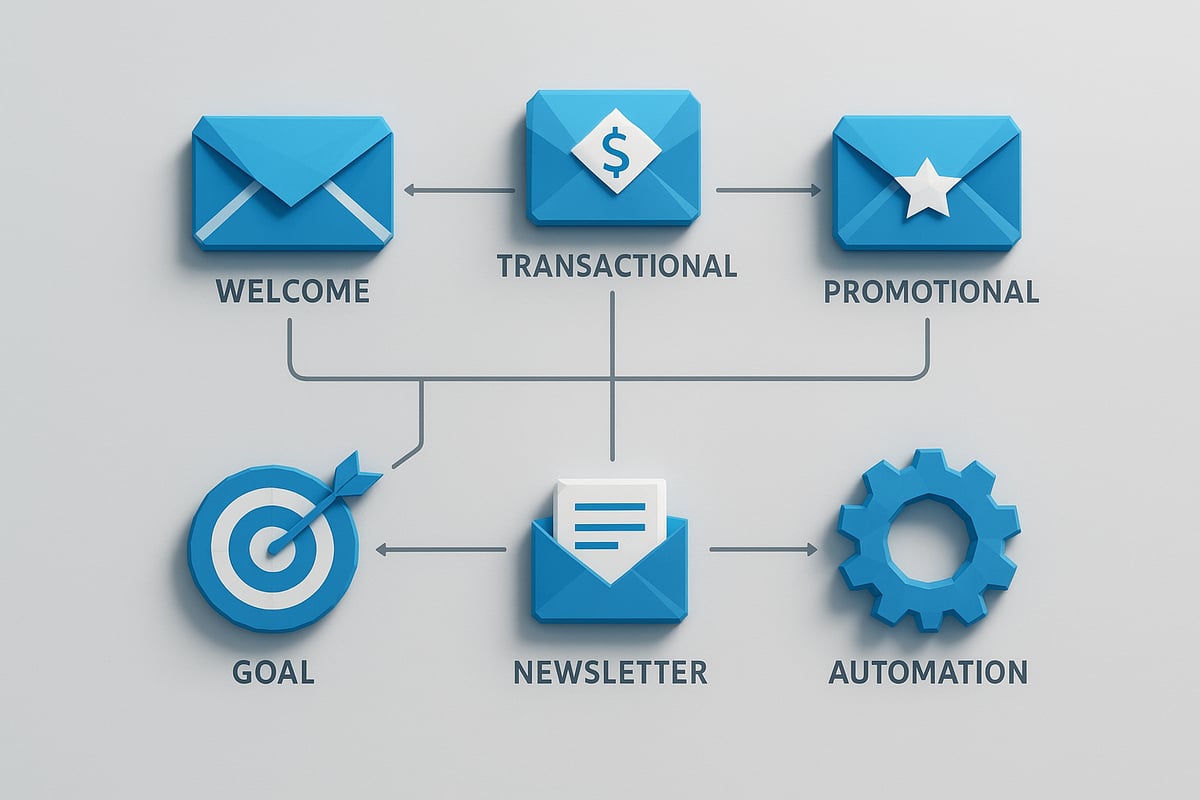
To maximize impact, align different types email with your business objectives. Start by identifying your main goals: are you focused on customer acquisition, retention, engagement, or support? Each stage of the customer journey benefits from specific email types.
For example, welcome emails are ideal at the onboarding stage, while transactional emails build trust during purchase and account activities. Promotional emails drive conversions, and newsletters foster long-term loyalty. Drip and lifecycle campaigns nurture leads and guide users toward activation, while abandoned cart and winback emails help recover lost opportunities.
Segment your audience to tailor different types email to their preferences and behaviors. Use a mix of promotional and transactional messages for balanced communication. Consider this quick comparison:
| Goal | Best Email Types |
|---|---|
| Acquisition | Welcome, Drip, Promotional |
| Retention | Newsletter, Winback, Lifecycle |
| Engagement | Interactive, Drip, Newsletter |
| Support | Transactional, Notification |
SaaS businesses may prioritize lifecycle and onboarding sequences, while ecommerce brands often focus on abandoned cart and promotional flows. B2B companies rely heavily on newsletters and educational content. According to recent benchmarks, companies that use a combination of different types email see up to three times higher engagement rates.
Integration with Modern Tools and Automation
Managing different types email at scale requires robust tools and seamless automation. Integrating your email strategy with a CRM or marketing automation platform ensures timely, relevant messages at every stage of the customer journey.
Leverage real-time triggers and database-driven workflows to automate delivery based on user actions. Leading platforms like ActiveCampaign, HubSpot, and Mailchimp offer advanced segmentation and analytics, making it easier to personalize content. Curious about hands-on integration? You can explore how to integrate Minimo with ActiveCampaign for streamlined campaign management.
Artificial intelligence is transforming the way different types email are personalized and optimized. AI-driven tools analyze user data, predict optimal send times, and generate tailored content that resonates with each recipient. For a deeper dive into how AI and automation are shaping the future of email marketing, see this overview of AI and automation in email marketing.
Brands that automate flows like abandoned cart reminders and lifecycle sequences report higher conversions and improved efficiency. By combining automation, segmentation, and AI, you can future-proof your different types email strategy for 2026 and beyond.
Future Trends in Email Types & Best Practices for 2026
The landscape for different types email is evolving rapidly, driven by emerging technologies and changing consumer expectations. Businesses that adapt to these shifts will position themselves ahead of the curve, ensuring their communications remain effective and secure.
Innovations to Watch
Several innovations are reshaping the way organizations use different types email in 2026. Interactive emails, powered by AMP and embedded forms, enable recipients to take actions—like filling out surveys or updating preferences—directly within the message. This shift streamlines the user journey and boosts engagement rates.
Artificial intelligence is making content more personal and timely. AI algorithms analyze user behavior to send hyper-relevant messages, while predictive targeting ensures each recipient receives the right message at the right moment. Privacy enhancements, such as end-to-end encryption and robust consent management, are now fundamental to all different types email.
Omnichannel strategies are gaining momentum, integrating email with channels like WhatsApp and SMS. This approach ensures seamless communication across platforms. Additionally, businesses are transitioning to no-code and database-driven email solutions, which speed up deployment and allow for agile experimentation.
For a deeper dive into lifecycle and event-driven innovations shaping different types email, review the Lifecycle marketing trends 2026 for practical case studies and emerging best practices.
Best Practices for Success
To maximize the value of different types email, organizations must focus on proven best practices. Continuous A/B testing is essential, allowing teams to refine subject lines, content, and design for optimal results. Staying compliant with regulations like GDPR and CAN-SPAM is non-negotiable, as privacy standards continue to evolve.
Deliverability remains a top priority. Strong sender reputation, email authentication, and regular list hygiene help ensure messages reach the inbox rather than the spam folder. Accessibility and mobile optimization are also critical, given the growing use of smartphones for checking different types email.
Customer-centric content should always take precedence over pure promotion. Focusing on value and relevance fosters loyalty and drives measurable outcomes. Brands that adhere to these principles consistently see higher returns. According to Email marketing ROI benchmarks 2026, following industry best practices can double the ROI of different types email campaigns.
By embracing innovation and following these practices, you will future-proof your different types email strategy for 2026 and beyond.<br><br>As we’ve seen, understanding the eight essential types of email is the key to staying ahead in 2026’s fast changing digital landscape. Whether you’re focused on onboarding, retention, or driving conversions, choosing the right email strategy can make all the difference for your business. With tools like Minimo, you don’t have to worry about complex sync scripts or manual workflows—you can connect directly to your database and trigger the perfect email at just the right moment. If you’re ready to put these insights into action and future proof your communication, Get started for free.
Article written using RankPill.